The Empty Pew ⛪
A Clipp Kaili original story
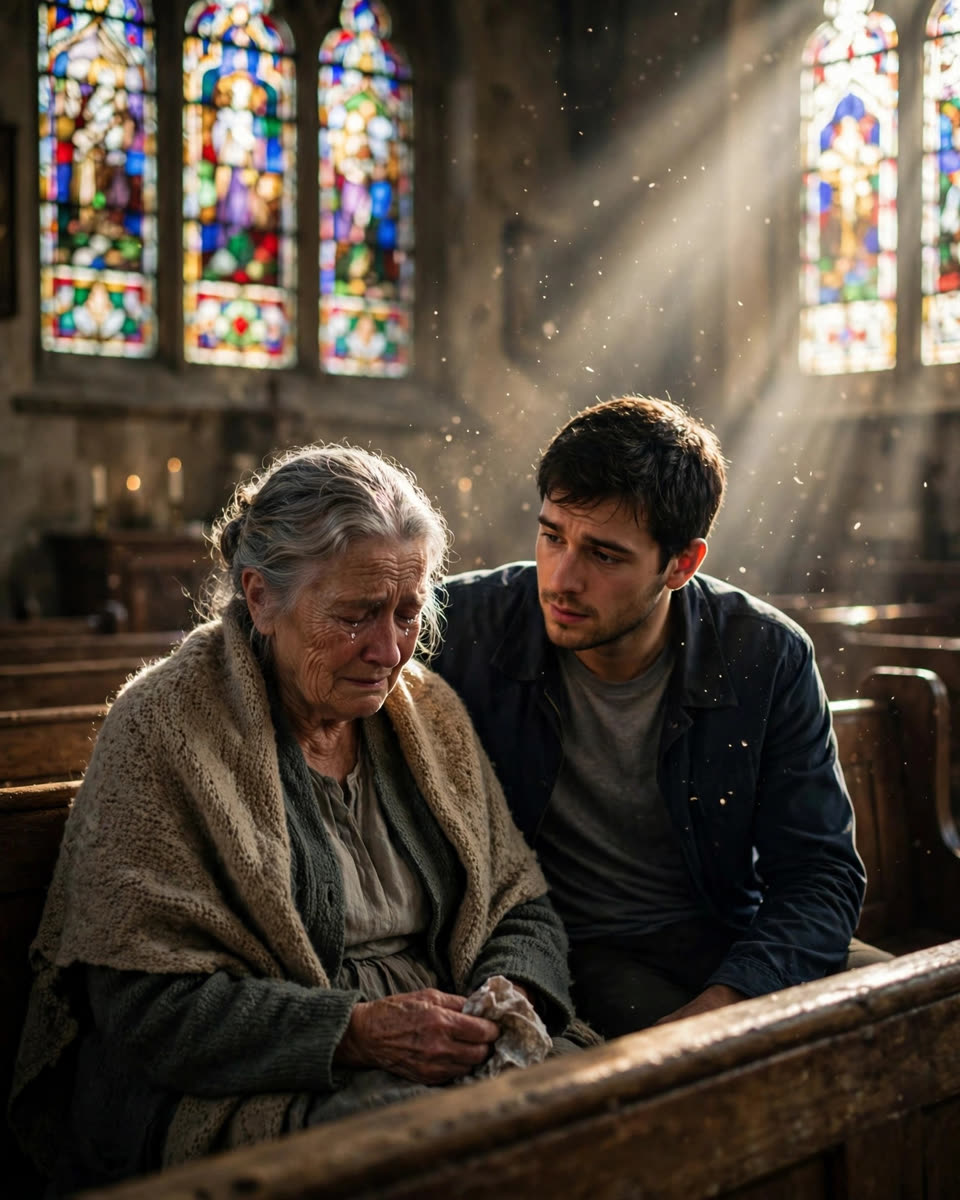
The Sunday after my grandfather's funeral, a stranger was sitting in his pew.
Fifty-two years. Third row, left side, aisle seat. His spot through four pastors, two roof leaks, and one organ fire in 1998.
And now a woman I'd never seen was sitting in it, crying into her hands.
His pew.
Her tears.
I stood in the back of the sanctuary, frozen, while the congregation sang around me. The ushers didn't stop her. Nobody said a word. It was like the whole church had quietly agreed to let her grieve.
Grandpa never missed a Sunday. He sat so still during prayers that us grandkids used to compete over who could make him smile first. He carried peppermints for the children in the row behind him. Twenty minutes early, every week, for fifty-two years — the ushers set their watches by him.
She was maybe sixty-five, in a gray coat that had seen better decades. She didn't sing. She just sat there with her shoulders shaking, staring at the altar like it owed her an answer.
When the service ended, she slipped out before the final hymn. I watched her hurry down the front steps and disappear around the corner.
"Mom," I said in the parking lot, "who was that?"
My mother shrugged, unlocking the car. "Someone who needed to be here. Leave it alone."
But I couldn't.
The next Sunday, she was back. Same pew. Same gray coat. Same silent tears.
And the Sunday after that. And the one after that.
Always alone. Always crying. Always gone before the final hymn.
The third Sunday, I checked the guest book in the vestibule on my way out. I flipped back four pages — visitors, newcomers, out-of-town family, every name accounted for. Hers wasn't there. She'd never signed it. Like she didn't think she had the right. I stood there a long time, running my finger down the empty lines where her name should have been.
By the fourth Sunday, my curiosity had turned into something heavier. This woman was haunting my grandfather's seat — and nobody would tell me why.
I asked Pastor Jim after the service. He poured himself coffee and chose his words like they were fragile.
"She asked about Walter," he said finally. "Wanted to know where he sat. Whether he was —" He stopped, stirring his coffee. "That's all I'm going to say."
"Pastor, she's crying in his seat every single week."
"I know," he said quietly. "Maybe the seat can take it."
"She knew Grandpa?"
Pastor Jim looked at me over his mug. "Son, I think you'd better ask her yourself."
So the fifth Sunday, I did something I'd never done in thirty-four years of churchgoing.
I arrived early. I waited in the back. And when she slid into the third row, left side, I walked down the aisle and sat beside her.
She startled. "Oh — I'm sorry. I'll move."
"Please don't," I said. "I'm his grandson."
Her face crumpled. Fresh tears. "I wondered if you'd come."
"You knew my grandfather?"
She nodded slowly, folding her tissue into smaller and smaller squares.
"What's your name?" I asked gently.
"Ruth." She took a breath that shook her whole body. "I knew your grandfather, young man — though he never once told me his name."
I frowned. "How do you know someone without knowing their name?"
"Because some people," she said, staring at the wooden cross above the altar, "save your life and walk away before you can thank them."
She reached into her coat pocket and pulled out a folded newspaper clipping, yellowed and soft at the edges.
My grandfather's obituary. His photograph. Circled in pen.
"I saw those eyes in the morning paper," she whispered, "and I dropped my coffee all over the kitchen floor."
She looked at me then — really looked at me — and said the words that stopped my heart cold.
"Forty-one years ago, your grandfather talked me off a bridge."
We sat in that pew long after the sanctuary emptied, and Ruth told me everything.
1984. She was twenty-nine years old. In March, her baby daughter died of SIDS — gone in her sleep, no warning, no reason. By June, her husband had packed a bag and left. By October, Ruth was driving to the Hawthorne Bridge at midnight with her headlights off.
"I wasn't going there to look at the water," she said quietly.
A man in a canvas work coat was standing on the pedestrian walkway. Fishing, of all things, at midnight. My grandfather — fifty years old then, hands like leather from the lumberyard.
He didn't grab her. He didn't shout. He just said, "Cold night for fishing. Colder for standing still."
And then he talked. About the river. About his father's boat. About nothing at all. For three hours, he stood between Ruth and the edge of that bridge and talked about nothing.
He came back the next night. And the next.
For a full year, every Friday night, they met at the Riverside Diner. Coffee. Pie. No advice. No preaching. Just company.
"Didn't you ever ask his name?" I whispered.
"He said names make it complicated." Ruth smiled through her tears. "He said, 'I'm just a fellow traveler, Ruthie. We're all just walking each other home.'"
She got better. Slowly. Then all at once. She remarried — a kind man named Douglas. Two daughters. Four grandchildren. A whole life built on the far side of that bridge.
"Every October fourteenth," she said, "I light a candle for the stranger on the bridge. Forty-one candles. I never knew his name until I saw his face in the obituaries."
I sat there, stunned. My grandfather — the quiet man who said grace too fast and fell asleep during sermons — had saved a woman's life and never told a single soul.
"Why the pew?" I asked.
"Because this is where he sat with God," she said simply. "I figured it was the closest I could get to saying thank you."
That Sunday, I walked Ruth down the aisle myself and introduced her to my mother, my aunts, my cousins. We scooted down the row and made room.
She sits with us now. Every Sunday. Third row, left side.
We leave the aisle seat empty. Some habits are sacred.
My grandfather never told us he saved a life. He just saved it — and then came home and set the table.
The pew was never empty, you see.
It was just waiting for her.
This story is a work of fiction, written to touch hearts and bring families closer.
← Back to all stories