The Dress 👗
A Clipp Kaili original story
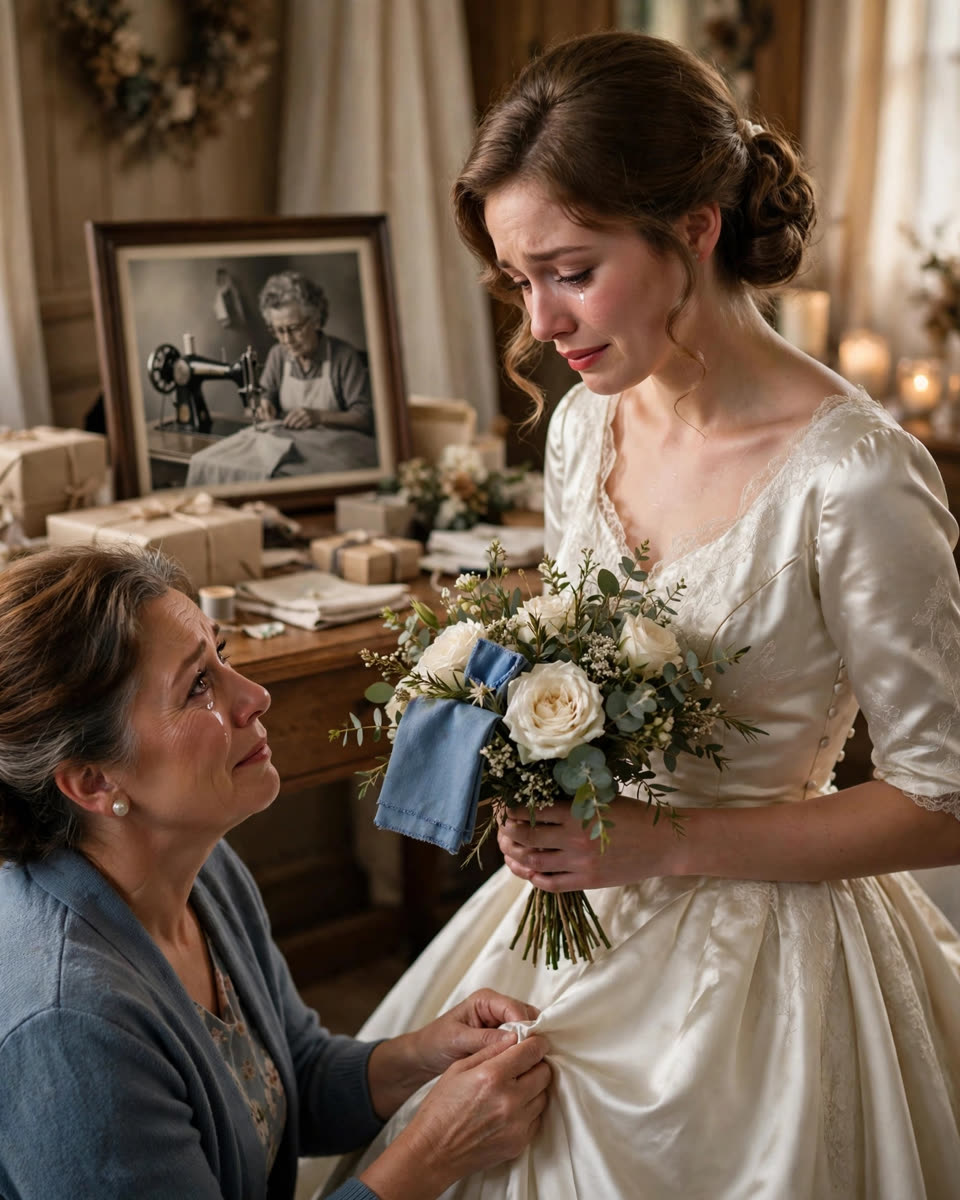
My daughter found another woman's name sewn into the hem of my wedding dress.
We were in my bedroom, the dress spread across the bed like a cloud, three weeks before her wedding.
"Mom," she said slowly, holding up the hem, "who is Elena Ruiz?"
I froze.
Inside the hem, stitched in tiny blue thread, was a name I had never seen in my life.
Elena Ruiz.
My wedding dress had a stranger's name sewn into it.
My daughter turned the hem over in the lamplight, and there it was again — the same name, stitched twice, like a signature. Like Elena wanted to make sure nobody ever missed it. Goosebumps ran up my arms. Forty years I'd owned this dress. I'd worn it, stored it, shown it to friends — and never once looked inside the hem.
"Maybe it's the designer," my daughter said, trying to laugh. But her voice wobbled.
Designers don't hand-stitch their names inside hems in blue thread. I knew that much, even with my heart hammering.
I sat down on the edge of the bed. The satin whispered under my weight.
"Let me call your grandmother," I said.
I dialed with fingers that didn't feel like mine. "Mom," I said when she picked up, "where did my wedding dress come from?"
A pause. "Why do you ask, honey?"
"There's a name sewn into the hem. Elena Ruiz."
The silence on the other end lasted so long I checked to see if the call had dropped.
"Oh," my mother said softly. "Oh, honey. I haven't thought about Elena in forty years."
My daughter and I looked at each other. I put the phone on speaker.
And then my mother told us the part of my wedding I never knew.
1978. My parents had nothing. My father had been laid off from the plant that spring, and by fall they were counting pennies for groceries.
My mother cried for a week because she couldn't afford a wedding dress. Not a new one. Not even a used one from the consignment shop.
Then a neighbor told her about a seamstress two towns over. Elena Ruiz. Word was, she made wedding dresses for girls who couldn't pay.
My mother drove there on a Tuesday with twelve dollars folded in her purse and shame burning her cheeks.
Elena took one look at her — really looked at her — then took one look at those twelve dollars and pushed the money gently back across the table.
"Honey," she said, "your money's no good here."
She led my mother to a back room and pulled out a dress — her own sample dress, sewn with her own hands, beaded bodice, satin that caught the light like water.
She worked through the night to alter it, by lamplight, so it would fit my mother perfectly by morning.
My mother told us she fell asleep on Elena's couch to the sound of that sewing machine — whir, pause, whir — and woke at dawn to the smell of coffee and a dress that fit like it had been made for her. Because it had been. Re-made, anyway, through the night, by a stranger's hands.
She charged nothing. Not a penny.
And before she handed it over, she stitched her name inside the hem in blue thread — tiny, careful stitches.
"So you'd remember," Elena told my mother as she zipped her up, "that somebody loved you on your wedding day, even though you never met her."
My mother wore that dress down the aisle. I wore it twenty-five years later. And in three weeks, my daughter would wear it too.
Three generations. One stranger's kindness, holding us all together like a seam.
I thought about all the photographs — my mother laughing in 1978, me twirling in 2003 — and in every single one, hidden in the hem, Elena's name had been there. Watching. Holding.
I sat on that bed and cried into forty-year-old satin while my daughter held me.
"Mom," she whispered, "we have to find her. We have to thank her."
We started searching that very night — old phone books, newspaper archives, anything.
And what we found broke our hearts and healed them at the same time.
Elena Ruiz had died in 2003. She was eighty-one years old. She never married. She never had children of her own.
But her obituary in the Millbrook paper called her "the wedding angel" — because over thirty years, she gave away more than two hundred wedding dresses to girls who couldn't afford them.
Every single one with her name stitched in blue thread inside the hem.
Two hundred brides. Two hundred blue-threaded names.
We found her niece, Rosa, living three states away. When we told her about the dress — about three generations wearing it, about the wedding three weeks away — she wept right there on the phone.
"She always said the dresses were her daughters," Rosa told us, her voice breaking. "She'd say, 'I never had babies, but I dressed two hundred brides.'"
Rosa mailed us a photograph: Elena at her sewing machine, bent and smiling, a needle glinting between her fingers.
We framed it. It sat on the gift table at my daughter's wedding, next to the flowers.
And when my daughter walked down the aisle in that dress — the dress Elena made, my mother wore, I wore — she carried a small square of blue fabric tucked into her bouquet.
Elena's name, cut from a scrap Rosa sent us.
"So she's here too," my daughter said before the ceremony, tears on her lashes.
Afterward, Rosa called, crying happy tears. "Two hundred and one," she said.
I didn't understand. Then she explained: Elena kept a notebook her whole life. Every bride's name. Every wedding date.
My daughter was number two hundred and one.
Some stitches hold more than fabric.
Some hold whole families together — across forty years, across towns, across the line between strangers and kin.
This story is a work of fiction, written to touch hearts and bring families closer.
← Back to all stories