The Prom Dress Fund
A Clipp Kaili original story
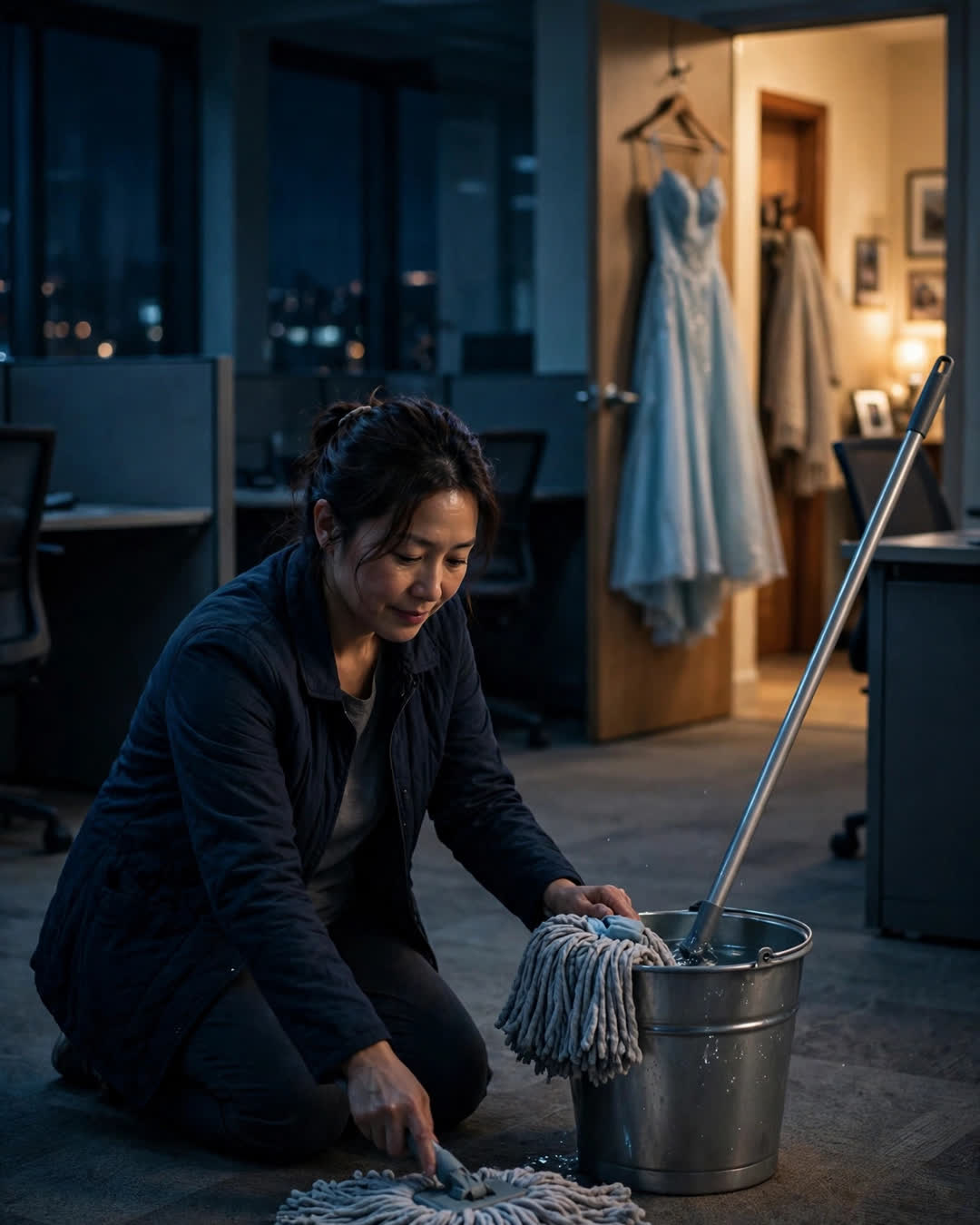
My mother told me my prom dress cost forty dollars at the thrift store, and I believed her for eleven years.
It was pale blue, with a skirt that moved when I walked, and when I tried it on in our kitchen she clapped like I was walking a runway in Paris. "Look at you," she said. "That dress was waiting for you." I wore it that night feeling like the luckiest girl in the county, because my best friend's mother had spent three hundred dollars and mine had found magic for forty.
Mom worked at the elementary school cafeteria. Money in our house was counted in envelopes on the counter — rent, electric, gas, groceries — and there was never an envelope for extras. I knew better than to ask for a new dress. I told her a thrift store dress would be fine, and I meant it. She nodded too quickly. I remember that now.
The truth came out when we were cleaning her apartment after she moved to be closer to my sister. In the back of her closet, behind winter coats, was a shoebox labeled in marker: PROM — DO NOT TOUCH. Inside were pay stubs. Not from the school. From a cleaning company, weekend nights, office buildings downtown. Twelve months of Saturdays and Sundays, 6 p.m. to midnight, scrubbing bathrooms and emptying trash cans while telling us she was at her friend Carol's playing cards.
And at the bottom was the receipt. The dress had cost two hundred and eighty-nine dollars. New. From the mall.
Under the receipt was a note in her handwriting, folded once: "She will only be seventeen once. I can rest later."
I sat on her closet floor and cried until my sister found me.
That night I called her. "Mom. Why didn't you tell me?"
"I did tell you," she said. "I told you the dress cost forty dollars. That was the part you needed to carry that night. The rest was mine to carry."
"You cleaned toilets for a year for a dress I wore for five hours."
"No, honey," she said, quiet. "I cleaned for a year so that for five hours, you would not feel like the girl whose mother could not afford things. There is a difference. You walked into that gym with your head up. That is what I bought."
She never made me feel guilty. She never brought it up at holidays as a story about sacrifice. She hid the work the way she hid the price tag — completely, on purpose, because love that keeps a receipt is not love, it is a loan.
I still have that dress. My daughter is fourteen, and last month she found it in my closet and held it up to herself in the mirror. "Can I wear this someday, Mom?" she asked.
I looked at her standing there, barefoot, dreaming, and I thought of my mother on her knees in an office building at midnight, a year of weekends she never got back, spent so her daughter could feel beautiful without feeling like a burden.
"Yes," I told her. "Your grandmother already made sure it was paid for."
Some dresses are just fabric and thread.
Others are a year of a woman's life, folded carefully into a skirt, so her daughter never has to know how heavy it was.
This story is a work of fiction, written to touch hearts and bring families closer.
← Back to all stories