The Open-When Box
A Clipp Kaili original story
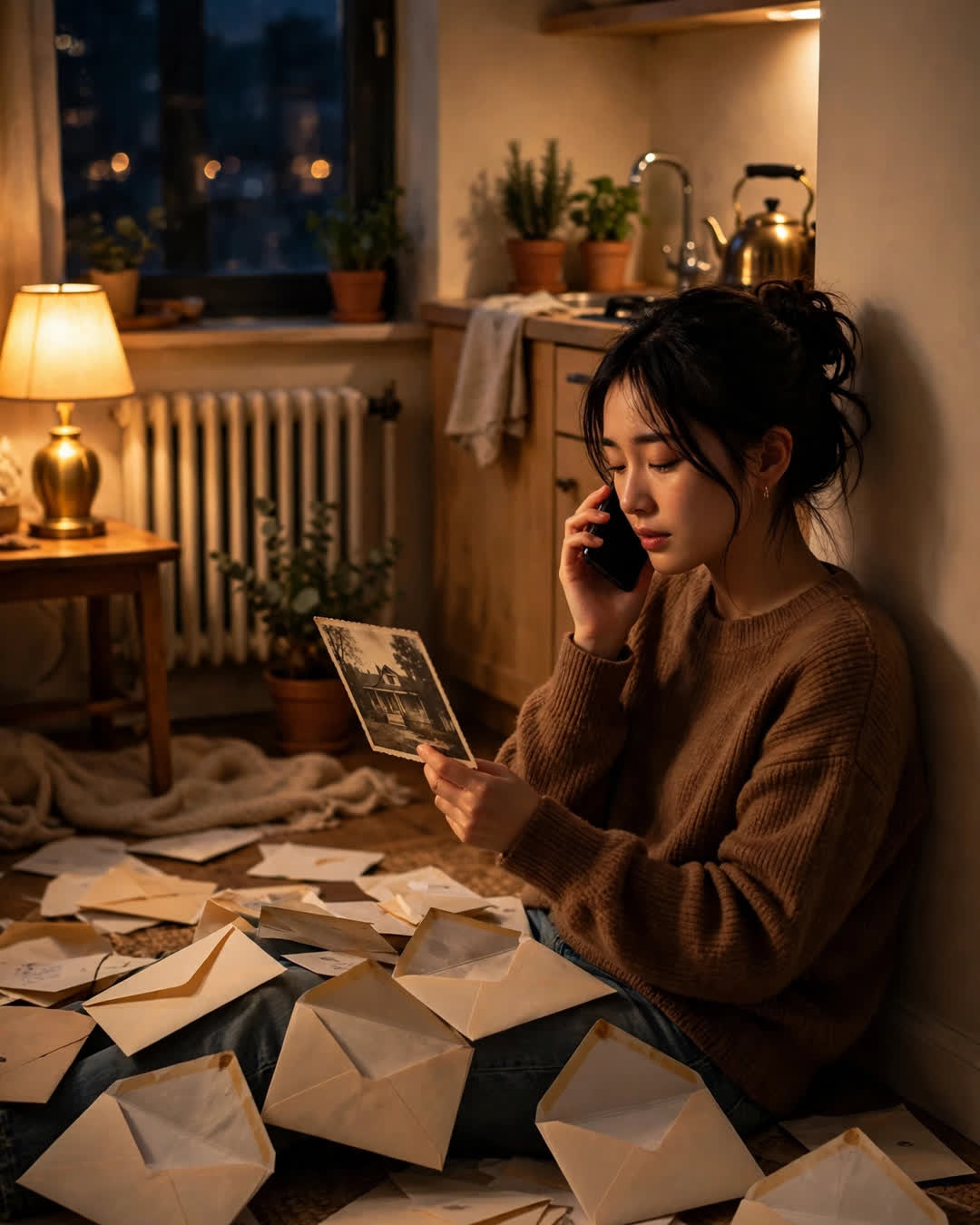
My mother handed me the box at the door of my first apartment and said, "Don't be dramatic and open them all tonight."
The apartment was a fourth-floor walk-up with a radiator that clanked like a ghost and a kitchen the size of a closet. I was twenty-three, broke, thrilled, and terrified in equal measure. Mom had driven two hours with a car full of thrift-store dishes and cleaning supplies, and at the very end, from the trunk, she produced a plain cardboard box tied with kitchen string.
On the lid, in marker: OPEN WHEN.
Inside were envelopes. At least twenty of them, each labeled in her handwriting. "Open when you can't sleep." "Open when the neighbors are loud and you want to cry." "Open when you cook something good and there's no one to tell." "Open when you get the job." "Open when you don't."
I was good. I want that on the record. I lasted four months on discipline alone, opening them one at a time, exactly as instructed. The can't-sleep envelope held a list of every boring story from my childhood, written out longhand — "by page two you were always out," she'd noted. The didn't-get-the-job envelope held a five-dollar bill and the words: "Then their loss is permanent and your rent is temporary. Apply again tomorrow."
Each one was so exactly her voice that the apartment stopped feeling empty. It felt supervised, in the best way.
But there was one I avoided. It sat at the bottom of the box getting heavier every month, the way unopened things do. "Open when you miss home."
I told myself I was saving it. The truth is I was afraid of it — afraid that opening it would make the missing official, would mean I had not made it out here on my own. I was twenty-three and believed that needing my mother was something I was supposed to be finished with.
The night I finally opened it, I had not even had a bad day. I had had a good one — a raise, dinner with friends, laughter on the train home — and I walked into my quiet apartment and the goodness of it all suddenly had nowhere to go, because the person I wanted to tell first was two hours away and it was too late to call.
I sat on the floor and opened the envelope.
Inside was a photograph I had never seen: my mother at twenty-three, standing in the doorway of her first apartment, holding a cardboard box. On the back she had written: "Your grandmother made me a box too. I opened this one the night I missed home so much I could taste it. Missing home is not going backward, baby. It is proof the love back there is still doing its job out here. Call me. It's never too late. It will never be too late. — Mom"
It was 11:40 at night. I called her.
She answered on the second ring, wide awake, like some part of her had been sitting by that phone for five months. "There she is," she said. "I was wondering when you'd get to the bottom of the box."
We talked until one in the morning about nothing — the radiator, the raise, a recipe. The missing did not disappear. It just took its proper seat, not as a failure, but as a thread.
I keep the box. It is mostly empty now.
But I have started a second one, for someday, and the bottom envelope is already written.
This story is a work of fiction, written to touch hearts and bring families closer.
← Back to all stories