The Note Under the Door
A Clipp Kaili original story
In sixteen years, my father never once said the words "I'm sorry" out loud. Not to anyone. Not about anything.
He was not a cruel man. He was a proud one, raised by a father who treated apology like a leak in a roof — something a man fixed quietly and never discussed. In our house, sorry came in other forms. Sorry was your bike fixed overnight. Sorry was the car washed. Sorry was a plate of toast left outside your door after a fight, still warm.
The fight that October was different. I was sixteen, furious about a rule I can't even remember now, and I'd said the thing teenagers say to end arguments forever: You don't listen. You never listen. You only know how to be right.
Dad went very still. Then he said, too quietly, "Then I won't bother talking," and walked out to the garage.
We didn't speak for two days. Mom moved between us like a diplomat with casseroles. I lay in my room rehearsing my victory, and it tasted worse every hour.
On the third morning, I found the note.
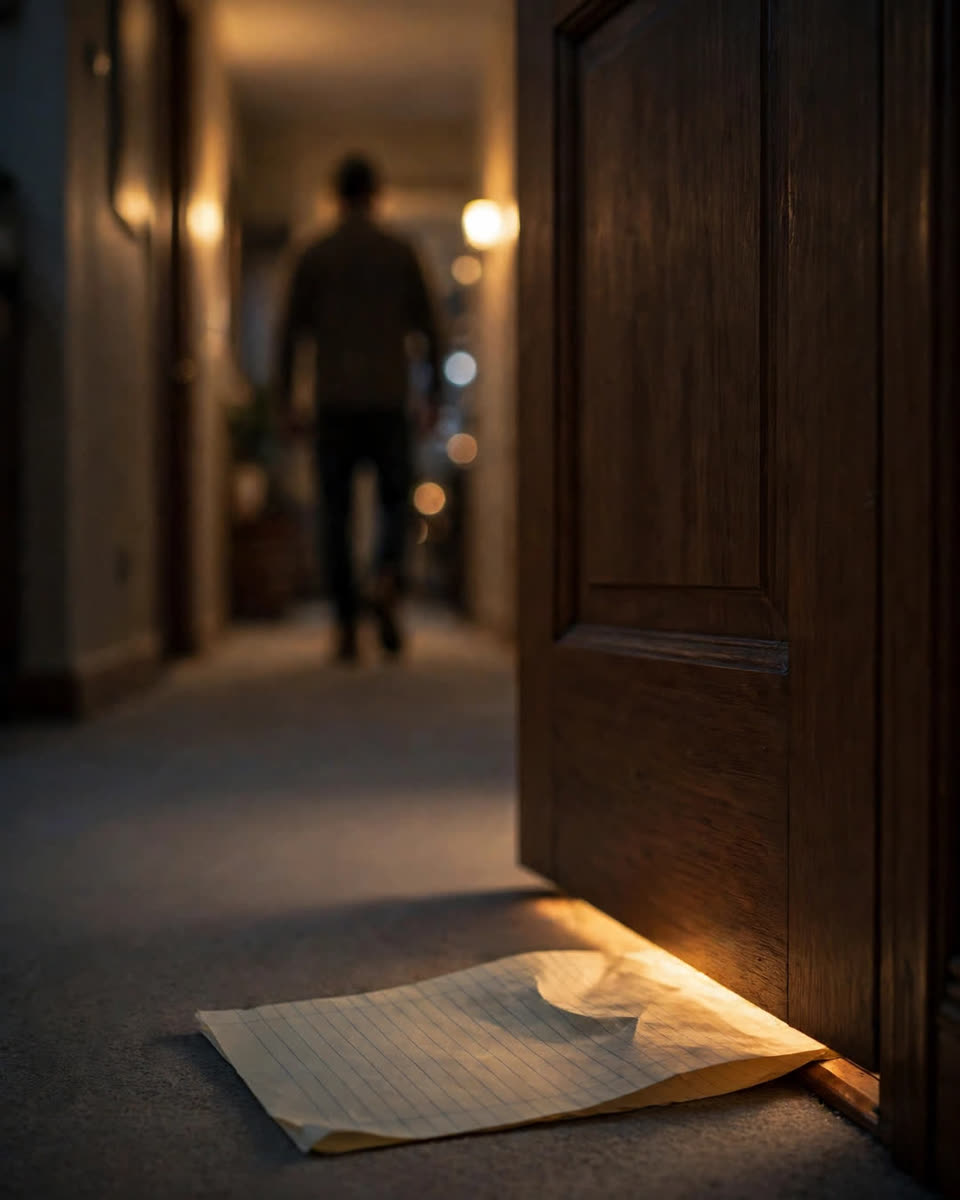
It had been slid under my bedroom door sometime in the night — a sheet of lined paper torn from the pad by the phone, the handwriting of a man who wrote with his whole arm, blocky and unpracticed. It said:
"Son. I have been thinking about what you said. You were not wrong. I do listen like a man waiting to answer, and that is not the same as hearing. Your grandfather never learned the difference. I am trying. I was wrong Tuesday and I handled it worse. I am sorry. I will do better or I will keep writing notes until I can say it. — Dad"
I sat down on the floor with my back against the door and read it four times.
He never did learn to say it out loud. I want to be honest about that, because the note is not a magic story. Dad went to his grave a man who apologized with toast and motor oil and, twice more in my life, with paper. When my sister's marriage ended, a note appeared in her suitcase. When I lost my first job, one came in the mail, no return address I didn't already know by heart.
But here's what I've learned, now that I have a teenage son of my own who is currently not speaking to me about a rule I can't fully remember making: an apology doesn't care how it travels. It only cares that somebody was willing to carry it — even if the only road they could manage was an inch under a bedroom door, in the middle of the night, in handwriting that embarrassed them.
My son's door is at the end of the hall. The pad by our phone is mostly for grocery lists.
Last night I tore off a sheet anyway.
Some things a father can't say. So he writes them — and slides them, shaking, into the light.
This story is a work of fiction, written to touch hearts and bring families closer.
← Back to all stories