The New Year's Jar
A Clipp Kaili original story
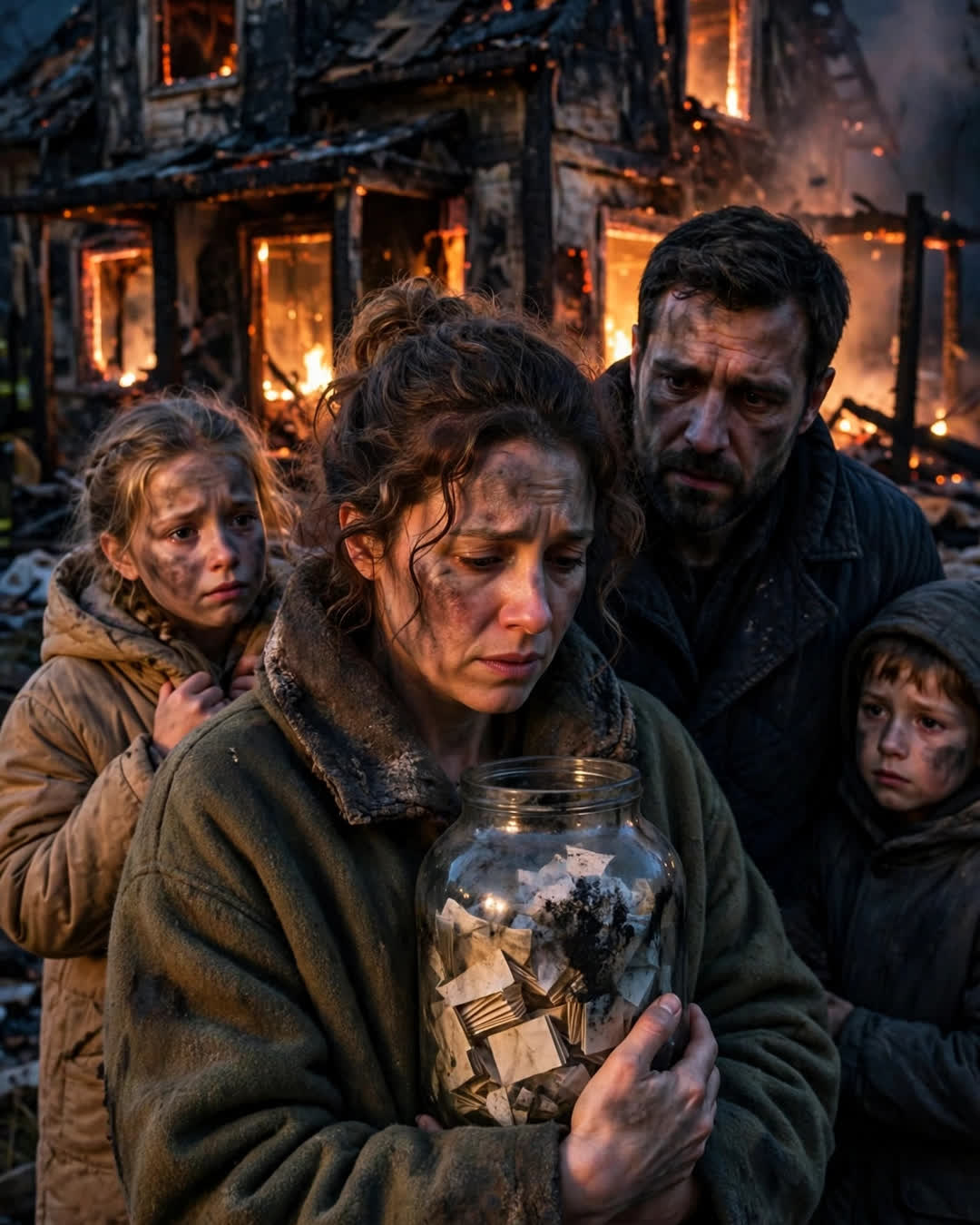
Every New Year's Eve, my family reads the jar — and the year of the fire, it was the only thing my mother carried out of the house.
The tradition started the January I turned ten, when Mom set a big glass cookie jar on the kitchen counter with a stack of paper slips beside it and announced the only house rule she ever enforced all year. Anytime something good happened — big, small, stupid, didn't matter — you wrote it down, folded it up, and dropped it in. You were not allowed to read anyone else's. You were not allowed to reach in early. The jar stayed sealed until December 31st, when we would dump the whole year onto the dining room table and read it aloud, one slip at a time, until midnight.
Some years the jar overflowed. The year my brother made the team and Grandma beat her diagnosis and Dad finally got the promotion, we read until nearly one in the morning, laughing until our faces hurt.
Then came the year of the fire.
It started in the dryer vent on a Tuesday in October while we were all at work and school. By the time the trucks got there, the kitchen was gone and the smoke had taken almost everything else. We stood in the yard in borrowed coats watching firefighters carry out blackened pieces of a life, and a neighbor put a blanket around my mother, who was shaking — not, I realized, from the cold.
In her arms, against her chest like a baby, she was holding the jar.
She had run past the photo albums. She had run past her jewelry box, her purse, the fireproof safe with every important paper our family owned. On her way out of a burning house, my mother grabbed a glass jar full of folded paper slips.
I didn't understand it that night. I will be honest — I was almost angry about it, standing in that yard. Papers could be replaced. Photographs couldn't. It took me until New Year's Eve to understand what she had actually saved.
We spent that December in a rental house with donated furniture and a tree somebody from church dropped off without a name. It would have been the easiest year in history to skip the tradition. Nobody would have blamed us. Instead, on December 31st, Mom set the soot-smudged jar in the middle of a borrowed table, and we read.
"Dad fixed the porch swing without being asked."
"Maya laughed at breakfast for no reason and we all lost it."
"First tomatoes. Enough for the whole street."
Slip after slip, a whole ordinary year rose up out of that jar — a year none of us could have recalled in the smoke and the insurance forms and the loss. The fire had taken our house in an afternoon. Reading that night, we found out it had not taken our year. Mom had carried the year out in her arms.
One slip near the bottom was in her handwriting, dated the week after the fire. She read it herself, and her voice only shook a little.
"Still us," it said. "Different house. Still us."
We keep the jar in the new house now, on a shelf Dad built from wood salvaged out of the old porch. It is bigger than the first one. My own kids race to fill it. Every December 31st, when we pour the year out onto the table, I think about my mother running through smoke with her arms full of gratitude while everything she owned burned behind her.
She knew something the rest of us had to learn the hard way.
A house can burn down in an afternoon.
A year you paid attention to cannot be taken from you at all.
This story is a work of fiction, written to touch hearts and bring families closer.
← Back to all stories