The Kitchen Table
A Clipp Kaili original story
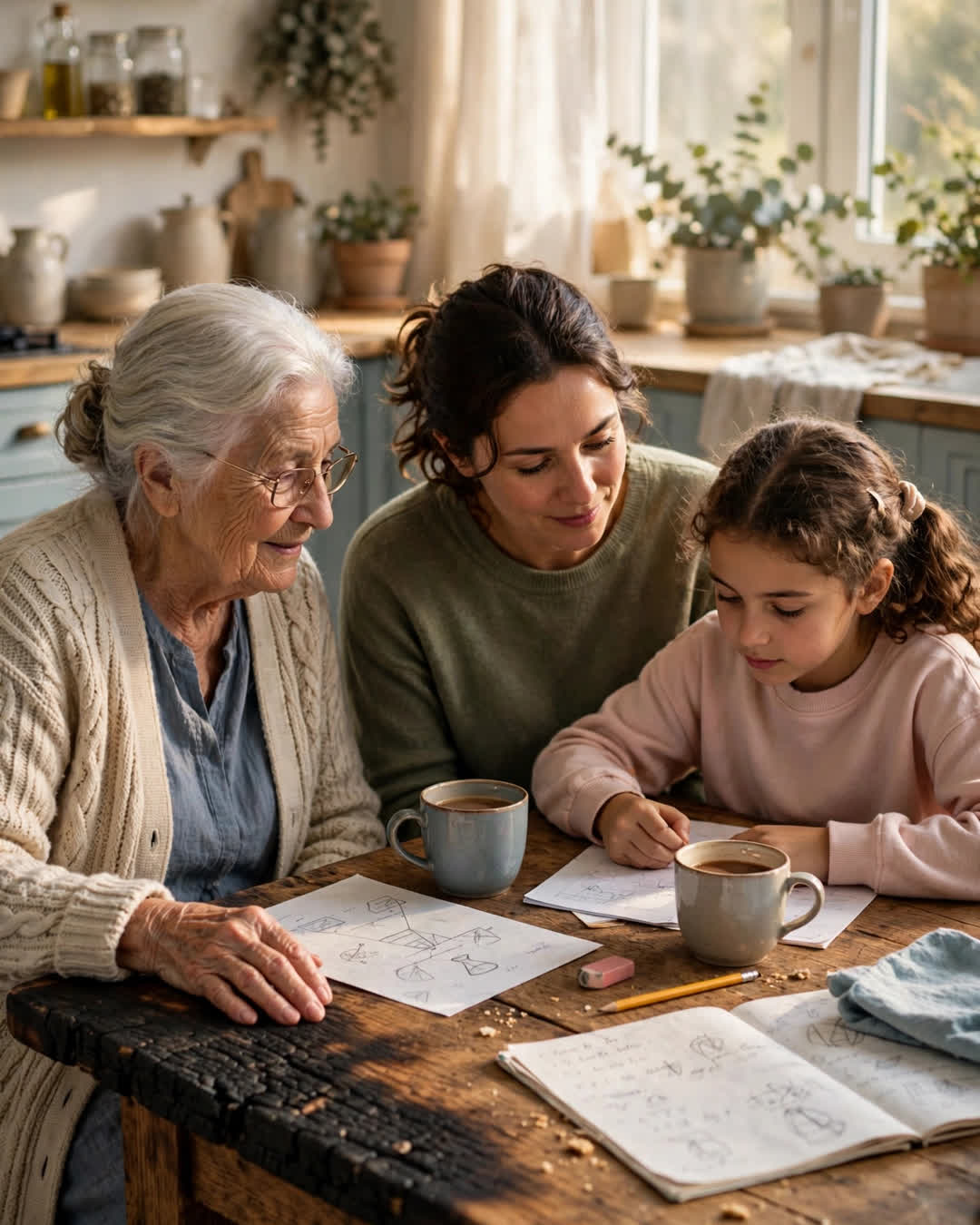
Everything true in our family was said at my grandmother's kitchen table, because that table was the one place nobody was allowed to perform.
It was not a beautiful table. It was scarred oak, wobbled unless you folded a matchbook under the southwest leg, and bore a pale ring from 1987 where my uncle set down a hot pot and got a lecture that entered family legend. Three generations of women sat at it: my grandmother, who bought it with her first year of teaching money; my mother, who did her homework on it and later her taxes and later still my college applications; and me, who learned to shell peas there before I learned to read.
At that table, my grandmother confessed she had once been engaged to a man named Walter for exactly eleven days before choosing my grandfather — news delivered at age eighty-one, over pie, to general uproar. At that table, my mother told us she was pregnant with me, and nineteen years later, that the lump was probably nothing, and two years after that, holding both our hands across the scarred wood, that it wasn't nothing, but she had time, and time was a table you could still sit at.
At that table, I told them I was leaving a marriage that looked fine from the street. My grandmother did not gasp. She got up, put the kettle on, and said, "Well. The table has heard worse and held."
The fire took the house on a Tuesday in February. A space heater, a curtain — the fire chief used the word "fast" three times. We stood across the street in the cold in our coats over pajamas, my grandmother between my mother and me, all holding hands like a paper chain, and watched the windows go orange.
Nobody was hurt. That is the headline, and we say it first, every time, because it is the whole miracle.
But when the chief said we could go in the next day, with masks, for anything salvageable, my grandmother walked through that blackened house past her wedding china fused in the cabinet, past the piano, past fifty years of everything, straight to the kitchen.
The table was scorched down one side. One leg was charred through. It smelled like a campfire in a rainstorm. And it was standing.
"The chairs can go," my grandmother said. "Bring the table."
It took four firefighters and my cousin's truck. That table now sits in my mother's new kitchen — smaller house, different light — with the burn running down its side like a signature. We never refinished it. My mother runs her hand over the scorched edge every morning making coffee, a habit she does not know she has.
Last month, my daughter — fourth generation, nine years old — climbed up at that table, spread out her homework, and announced to the room that she had decided to be a scientist and also a poet, and that anyone with objections should speak now.
My grandmother, ninety-one, folded her hands on the scarred wood and smiled.
"The table has heard better," she said, "but not much."
Some families pass down jewelry. Some pass down houses. Ours passes down a surface where the truth can land — scorched, wobbling, and still holding up everyone who leans on it.
This story is a work of fiction, written to touch hearts and bring families closer.
← Back to all stories